
Restoring habitat and preserving open spaces on family-owned farmland in Klickitat County
Agriculture, including ranching, timber, and farming, plays a central role in Klickitat County’s economy, while also preserving open spaces that benefit wildlife. Columbia Land Trust prioritizes working with agricultural landowners to conserve working lands and protect connected open spaces.
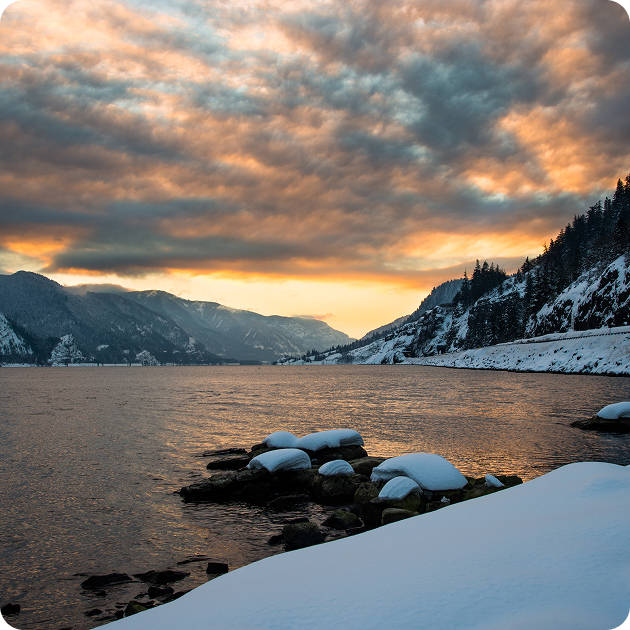
Columbia Land Trust recently partnered with the Fahlenkamp family to secure an agricultural conservation easement protecting 647 acres along the Little Klickitat River, outside Goldendale, Washington called Tupper Ranch. A conservation easement is a legal tool that pays landowners for their development rights to permanently maintain open space. This project aligned with the Land Trust’s conservation goals because it secured nearly 650 acres of farmland in an area of the state that faces significant subdivision and development pressure. This site of the new easement protects a mile of shoreline along the Little Klickitat, and its conservation offers numerous benefits for wildlife.
The now-conserved farmland is owned by two brothers and their spouses, Adam and Molly Fahlenkamp, and Karen and Keith Fahlenkamp. Keith and Adam’s family have deep ties to Klickitat County. “This area, just east of the Klickitat River, is a really special ecological transition zone,” said Keith. “Both sides of my family have a long history here,” said Keith.
Keith and Adam grew up on land adjacent to Tupper Ranch, and another farm outside Goldendale has been run by the Fahlenkamps since the late 1800’s, making it one of a small number of Century Farms in Washington State. (A Century Farm is one that has been operated by the same family for more than 100 years.)
The brothers approached Columbia Land Trust with this conservation project because they valued conserving the land and enhancing its wildlife habitat. The income they received from the sale of the conservation easement to the Land Trust will help them build a sustainable agricultural business for the next generation.
“I appreciate the care that Columbia Land Trust has for the land, and how they work to find balance. We had a lot of shared values in our desire to conserve these open spaces,” said Keith.
When Adam and Keith purchased Tupper Ranch, they didn’t know much about conservation easements, but they met with Land Trust staff to learn more. “We have seen other ranches in the area bought up by developers and subdivided into 20-acre lots, and we didn’t want that to happen here,” said Keith. “It has been a good match and good partnership working with Columbia Land Trust.”
Much of the ranch will continue to be managed for cattle rangeland and hay production, but several pockets of oak habitat, pine forest, and riparian habitat will be managed for wildlife. In 2023, the Fahlenkamps completed a riparian enhancement project with Yakama Nation to improve beaver habitat along Blockhouse Creek. This included fencing to keep cattle out of the creek, improving water quality and benefiting salmon. But cattle need water to drink, so the family installed a solar panel to power a small pump, and now water runs from a well up into a 100-year-old water tower and then into a steel tank in the cattle pasture, on demand. “An excellent blend of old and new,” said Keith, adding that they hope to continue with additional habitat enhancement projects in the future.
The family cares deeply about supporting soil health, water quality, and wildlife habitat. They do not use herbicides or chemical fertilizers, and they employ regenerative agriculture practices that help keep water in the ground to recharge the Little Klickitat River basin aquifer and limit erosion.
“My parents were also conservation and wildlife habitat minded,” said Keith, explaining how his dad participated in Washington State’s Conservation Reserve Enhancement Program, which compensates farmers for voluntarily planting native vegetation along salmon-bearing streams to help keep water clean and cool for salmon, improving habitat and water quality. “He planted thousands of trees and shrubs to create shelter belts all over the ranch. It was really positive and made a big difference for wildlife, especially birds.”
“Working with the Fahlenkamps to keep this ranch together will have long-term benefits for federally threatened mid-Columbia steelhead and Washington State – endangered western gray squirrel, in addition to maintaining open space for numerous other species,” said Land Trust Conservation Director Nate Ulrich. “It takes all of us to maintain these important places, and we are fortunate to be able to support the ongoing stewardship work of the family.”
Funding for this conservation project was provided by Washington Wildlife and Recreation program and US Natural Resources Conservation Service, as well as a donation from the Tupper-Fallenkamp Family.