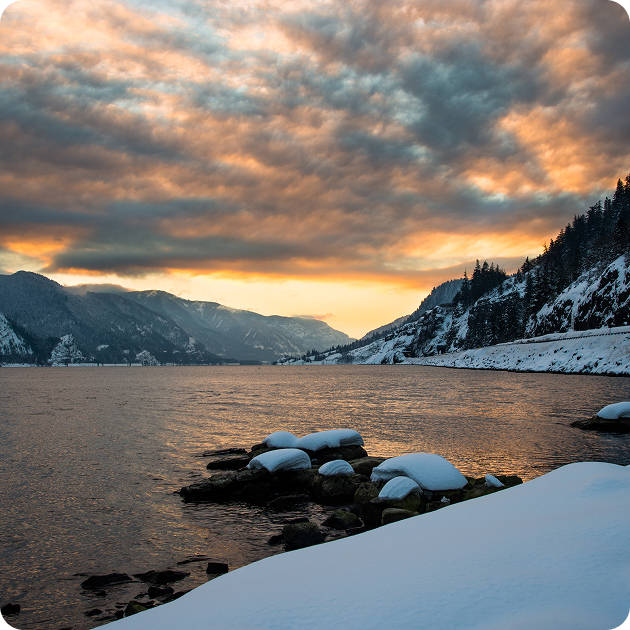

Improving streamflow and wildlife habitat outside White Salmon, Washington
Building on our strong start to 2026, Columbia Land Trust is excited to announce the conservation of Rattlesnake Creek, Phase 2. The 1,420-acre site is rich in wildlife habitat and located about 15 miles northeast of the City of White Salmon. This acquisition, combined with the Phase 1 purchase in 2023, completes the permanent protection of the entire 2,335-acre Rattlesnake Creek priority area.
Rattlesnake Creek is the largest anadromous (fish-bearing) tributary to the White Salmon River. Phase 1 protected 4.35 miles of streams, including 1.6 miles of the namesake creek. The newly conserved Phase 2 land supports the stream by permanently protecting mature Douglas-fir and ponderosa pine forest stands as well as old, open-grown Oregon white oaks. These mature habitats slow stormwater runoff within the steeply sloped Rattlesnake basin, facilitating groundwater recharge and late-season streamflow for steelhead and other federally listed fish species.
“Rattlesnake Creek and the public and private forestlands surrounding it are essential for many species of wildlife in this seasonally dry landscape,” said Land Trust Conservation Director Nate Ulrich. “Endangered Species Act listed steelhead and Pacific fisher use the riparian areas, and northern spotted owls benefit from the mature and old-growth uplands.”
Neighboring conserved lands, including thousands of acres managed by the Washington Department of Natural Resources, and the Yakama Nation Indian Reservation to the north, create impressive habitat connectivity around Rattlesnake Creek. Vast, connected landscapes like this are increasingly rare, and vitally important, as they strengthen ecosystem function and allow wildlife to move, adapt, and thrive.
At Rattlesnake Creek, Phase 1, in-stream restoration work with Yakama Nation Fisheries is already underway, as part of a floodplain enhancement project to increase the creek’s water quality and water holding capacity, and improve salmonid habitat. This project involved the placement of large wood structures to slow the flow of water, spread it out across the floodplain, sort gravels for spawning, and create pools that provide refuge and rearing habitat for young salmon to feed, rest, and grow.
The goals of our conservation and restoration efforts here are focused on creating conditions that support the growth of a mature, diverse forest, which will ultimately improve watershed health and water quality.
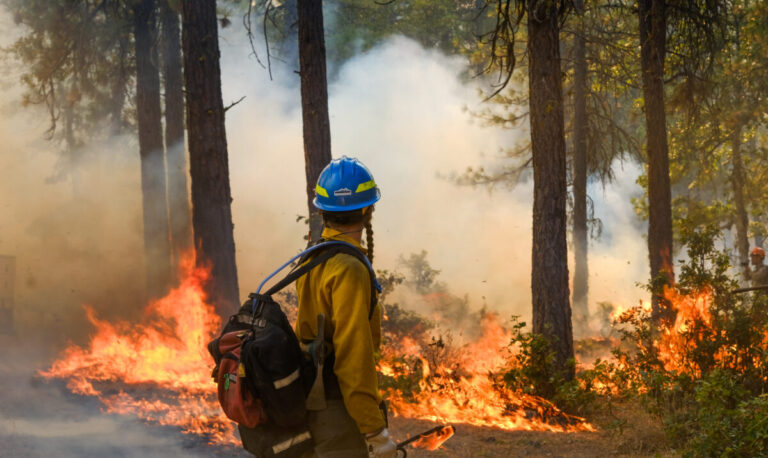
“I’ve seen the full suite of native wildlife species utilizing this Rattlesnake Creek including blacktail deer, elk, cougar, bobcat, coyote, black bear, fisher, and state-endangered western gray squirrel,” said Land Trust Natural Area Manager Adam Lieberg. “Going forward, we will manage the full 2,324-acre unit with the goals of improving riparian habitat for fish and wildlife, releasing oak from conifer encroachment, and improving forest resiliency to impacts from wildfire and drought. We’ve built strong momentum over the last two years, working with Yakama Nation to enhance around a mile of stream and floodplain habitat on the mainstem of Rattlesnake Creek, and we are looking forward to expanding our restoration efforts into the upland forest and woodlands where we have opportunities to reduce fire risk while improving wildlife habitat.”
The Conservation Fund purchased the entire Rattlesnake Creek property in 2021, creating time for the Land Trust to raise funds to permanently conserve the land in two phases.
“Conserving and restoring forests at this scale is about more than trees—it’s about sustaining entire landscapes,” said Kaola Swanson, Columbia Gorge Program Manager at The Conservation Fund. “Through targeted forest management that revives healthy upland forests, cold-water streams, and rich habitats, there is renewed hope that this forest will thrive in ways that will benefit its watershed and ripple through the ecosystem,”
“We could not have accomplished this without the vision, resources, and confidence of The Conservation Fund,” said Ulrich.
Funding for the conservation of Rattlesnake Creek, Phase 2 came from the U.S. Fish and Wildlife Service’s Section 6 Endangered Species Habitat Conservation Fund and the Washington Department of Ecology’s Streamflow Restoration Program, in addition to support from the Hollis Foundation, MillsDavis Foundation, and other individual donors.