
Restoration at Rainbow Natural Area is bringing rare wet prairie and oak habitats back to life.
What was once a flooded field unfit for continued agricultural production is now one of the most comprehensive wet prairie planting and seeding projects in Washington County, Oregon.
Nestled along a meander of the Tualatin River near the community of Scholls lies Rainbow Natural Area, a 76-acre conserved site where Columbia Land Trust is restoring native wet prairie, oak savanna, and oak woodland habitats in the river’s floodplain. These ecosystems are increasingly rare, have deep cultural significance, and provide critical habitat for Willamette Valley wildlife, including pollinators and birds that are threatened or declining in their range, like Western Meadowlark, Chipping Sparrow, and Slender-billed White-breasted Nuthatch.
“Two hundred years ago, oak habitats were much more widespread in the Willamette Valley,” said Natural Area Manager Emily Matson. “A lot of the valley bottom was filled with large wetland complexes, including wet prairie and oak. Our long-term goal at Rainbow is to restore these ecosystems and the adjacent riparian forest to create contiguous, high-quality habitat in the floodplain of the river. These habitats are critical for wildlife and very important to the Indigenous people of this place.”
The Tualatin Valley has long been—and remains—the ancestral homeland of the Atfalati band of the Kalapuya people, also known as the Tualatin Kalapuya. Through practices like seasonal harvesting and the use of cultural fire, the Kalapuya people maintained oak savannas, woodlands, and productive wet prairies that provided foods like camas, berries, and acorns. Restoration at Rainbow offers the chance for these ecosystems to flourish again on the landscape.
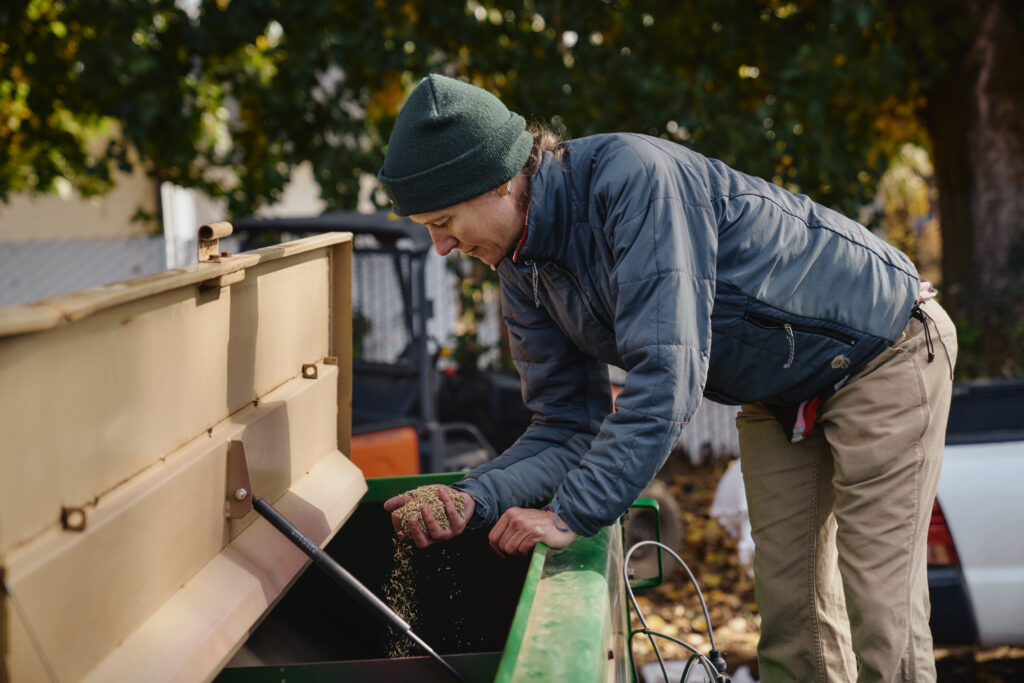
After more than a year of site preparation, in September 2024, Columbia Land Trust kicked off the first phase of planting on the 50-acre fallow field, sowing over 200,000 native lily bulbs, including camas, brodiaea, and allium species, along with 150 pounds of camas seed.
In October 2025, during a second and larger planting phase, we seeded a diverse mix of grasses, sedges, rushes, and wildflowers. This phase included more than 1,300 pounds of seed from more than 80 native wetland and prairie species, including tufted hairgrass, dense sedge, one-sided sedge, milkweed, lupine, sea blush, popcorn flower, and cinquefoil.
These plantings were implemented with support and expertise from two local partners: Jay and Jayson Hoffman and their team at Hoffman Farms provided agricultural expertise and implemented much of the field preparation, groundwork, and planting. George Kral, co-owner of Scholls Valley Native Nursery, was a key advisor throughout the project and supplied much of the seed and bulbs. George and his wife, Sara, bring decades of experience growing and hand-collecting native plants in the Tualatin Valley, ensuring that the species selected were not only appropriate for wet prairie conditions but locally adapted to thrive across the site.

Because of the scale of this effort, planning began years before the first bulbs touched soil. The project team evaluated the 50-acre field zone by zone, mapping subtle changes in elevation and seasonal hydrology. A difference of just a few feet in elevation can influence how long water lingers in winter and how dry soils become in late summer. These small variations in topography determine whether a species flourishes or struggles. By matching plants to the right soil type and moisture conditions, the team aimed to give each species the best possible start.
Some of the species we planted are difficult to obtain commercially, and a significant portion of the seed was collected from within the Tualatin River basin itself—including camas seed harvested from less than a mile upstream of Rainbow Natural Area. By sourcing locally gathered seed and working with local growers, the project supports not only habitat restoration but also regional seed stewardship and long-term ecosystem resilience.
To conclude the 2025 planting season, staff and volunteers gathered in December to plant 400 foothill sedge plants in the field, and 700 Columbian larkspur in the forested corridor along the river. These plantings further increased the site’s diversity and marked the culmination of an impactful year of restoration at Rainbow.
Looking ahead, restoration work continues. Future goals include planting Oregon white oak and Willamette Valley ponderosa pine to establish oak woodland communities on portions of the site, while maintaining wetter areas as open prairie. This spring, our stewardship team will assess the results of the prior plantings and manage the growth of non-native weeds.
“Long term, we hope to have a thriving ecosystem here that’s providing really important habitat for a variety of species, and habitat types that are increasingly rare,” said Emily. “We’re excited for spring and to see what comes up, what starts establishing, and then over time watching the prairie continue to evolve.”
Each planting brings Rainbow Natural Area closer to a resilient landscape where native plants and wildlife can flourish once again. We look forward to advancing restoration efforts here in 2026.
Funding for the plantings at Rainbow Natural Area came from the Oregon Wildlife Foundation and Tualatin Soil and Water Conservation District.