How protecting land leads to cooler waters, healthier forests, and more resilient ecosystems.
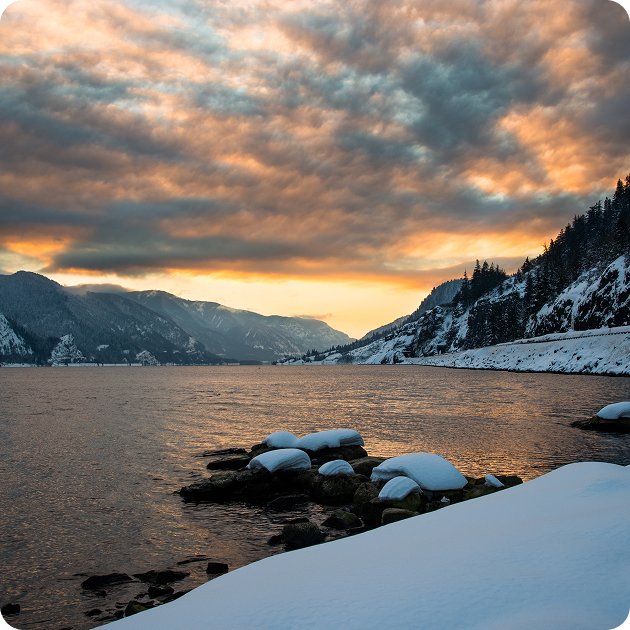
A long-term perspective has never been more important. Climate change is reshaping the landscapes we care for, altering ecosystems in ways that are already visible across the Columbia River region. Snowpacks are shrinking, rivers and streams are warming, and wildfires are becoming larger and more severe. At Columbia Land Trust, we hear about these changes directly from the farmers, foresters, Tribal Nations, and community members who experience them every day.
These changes place increasing stress on both people and nature. Forests become more vulnerable to insects and disease. Wildlife migration and habitat are disrupted. Floods, droughts, and wildfire threaten communities, while rising tempera
tures affect everything from salmon to human health. The challenges are daunting, but our conservation work is a powerful part of the solution. Strategies that sequester carbon, mitigate the impacts of climate change through natural systems, and help ecosystems adapt are known as Natural Climate Solutions. At Columbia Land Trust these climate solutions are woven into our work and most frequently fall into the two categories of forest conservation and habitat restoration. “Conservation and stewardship of land is climate action,” said Steward-ship Director Ian Sinks. “While our work is generally led with habitat goals at the forefront, addressing climate change with urgency is foundational to our conservation strategy.”
Forest conservation: Protecting the footprint of our forests
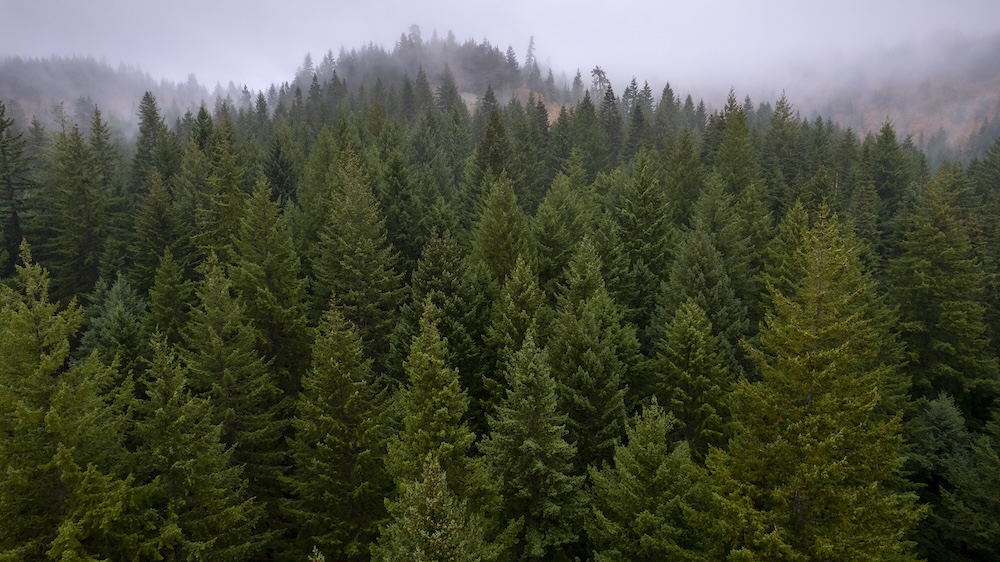
The native forests of the Columbia River region, often comprised of Sitka spruce, Douglas-fir, western hemlock, and red cedar, are among the most productive forests in the world for sequestering and storing carbon. When Columbia Land Trust conserves a forest, we ensure that it will continue absorbing and storing carbon for generations to come.
These forests of our region are critical components of resilient ecosystems, and they are often threatened by land conversion, development, and high-severity wildfires. It is our goal to keep these natural systems connected and healthy so they are better able to adapt in response to changing conditions over time.
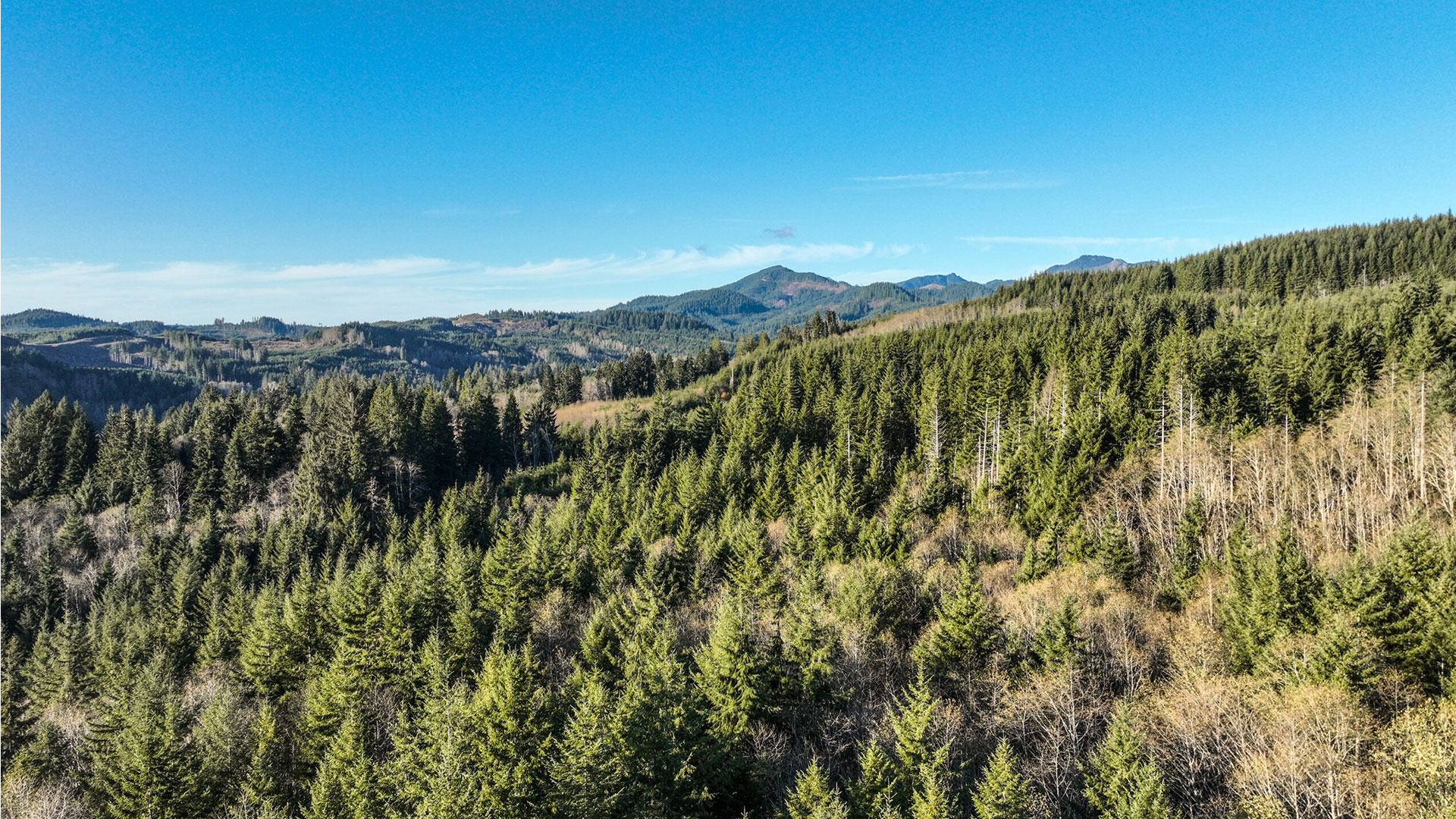
Our conservation priorities emphasize protecting both wild and working forests, which strengthen local economies and provide a renewable and carbon sequestering resource. In the coming years, we intend to conserve tens of thousands of acres of forestland not just to conserve important habitat but to sequester carbon, build natural resiliency, and avoid additional carbon emissions that would come from land division and conversion.
Habitat restoration: Building resilience in ecosystems
When we acquire and conserve land, it’s often been degraded, so we work to restore ecological functions. Our goal isn’t to return nature to a pristine, static version of the past, but to re-establish natural processes, structure, and composition, so these landscapes can sustain themselves and thrive a century from now, in a climate that will look very different from today.
Healthy ecosystems are inherently resilient and our stewardship and restoration strategies are designed with this adaptability in mind. Because we cannot always predict how a changing climate will affect the landscapes we care for we rely on long-term monitoring and science to guide our work. We collect data from streams, wetlands, prairies, grasslands, and forests while tracking wildlife populations . We combine this with partner monitoring efforts and regional science to help us understand how our management actions are influencing ecological health and how we should adapt our future restoration decisions.
Restoring habitats through planting hundreds of thousands of native plants and shrubs, managing forests to accelerate forest stand development, restoring wetland and riparian habitat, and improving agricultural land management practices are common examples of how our stewardship program is helping our region adapt to a changing climate. Tidal freshwater wetland restoration and floodplain reconnection can also have significant carbon sequestration benefits, but are more complex examples and the details of each project are important. All these initiatives have positive impacts on ecosystems and human communities.
By protecting and restoring natural systems today, Columbia Land Trust is investing in landscapes that can continue to store carbon, support wildlife and communities, and adapt to the challenges of a changing climate for generations to come.
Natural Climate Solution Case Studies From Columbia Land Trust’s work

The Removal of Kwoneesum Dam
In 2024, Columbia Land Trust removed Kwoneesum Dam in partnership with the Cowlitz Indian Tribe. The removal had immediate benefits for the Washougal River ecosystem, strengthening the watershed’s climate resilience by cooling water temperatures and allowing Wildboy Creek to run freely once again. Ongoing riparian restoration will continue to benefit water quality, and the forests surrounding the former dam site will grow and capture carbon, as will new plantings in the footprint of the former reservoir.
Prescribed Fire
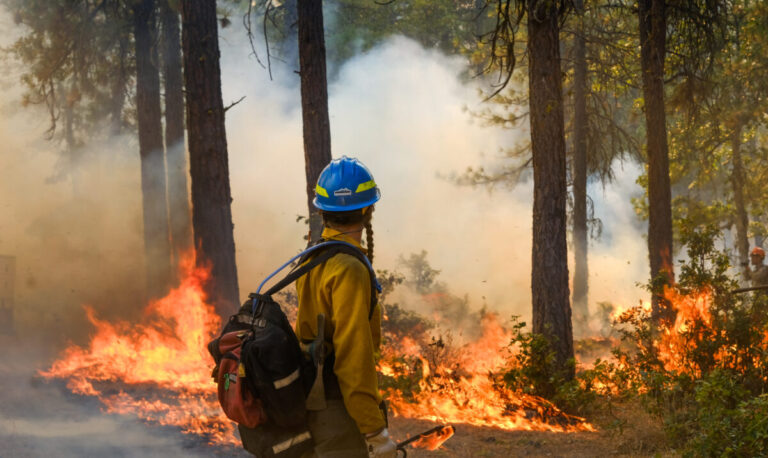
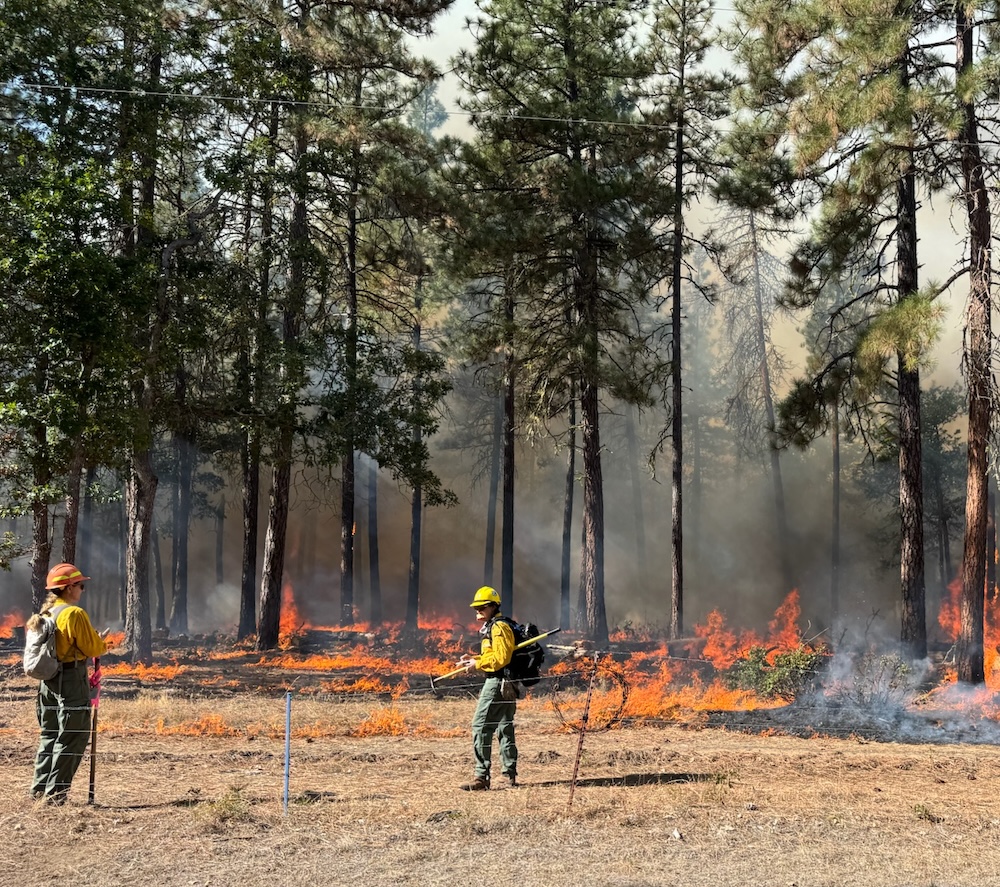
Columbia Land Trust utilizes prescribed burns as an stewardship tool to help us restore periodic fire to ecosystems that need it. “Climate change is contributing to larger and hotter wildfires across much of the West,” explained Natural Area Manager Adam Lieberg. “When these wildfires move into forests where fire has been suppressed for decades, the overabundance of fuels can cause larger and more destructive fires, that release staggering amounts of carbon. To combat this challenge, the Land Trust and our partners have developed a prescribed fire program aimed at restoring beneficial fire back into fire-adapted forests to improve wildlife habitat, reduce fuel loads, strengthen climate resilience, and make our communities safer.

Backyard Habitat
With more than 15,000 participants across four counties in two states, the Backyard Habitat Certification Program that we manage with Bird Alliance of Oregon is an incredible example of building climate resilience in urban and suburban areas. Participants learn, deepen their engagement with nature, and take climate action into their own hands. Benefits of naturescaped yards include additional shade, improved water capture and storage, carbon sequestration from trees and shrubs, and robust soil health.
Intact Forest Conservation
Not all the land we conserve requires restoration, some simply needs to be left to grow and adapt as it is already doing. By conserving the 600-acre Cedar Creek Forest in Columbia County, Oregon, the Land Trust is protecting many 100-year-old trees and preventing the loss of the carbon that they store. There are older growth forests across our service area, and protecting them has a different, but equally important, climate benefit than sites where we conduct active restoration.