
Personal tools
You are here: Home Rare Sandhill Crane Habitat Secured

Rare Sandhill Crane Habitat Secured

Land Trust acquires 82 acres of important wetland habitat to benefit endangered sandhill cranes and other wildlife

By Lindsay Cornelius and Cherie Kearney


Sandhill CraneNestled quietly among hundreds of acres of timber, a few miles from the small community of Glenwood, Washington and the Klickitat River, is an 82-acre parcel with habitat as unique as it is beautiful.  In December, Columbia Land Trust acquired the property for habitat conservation.


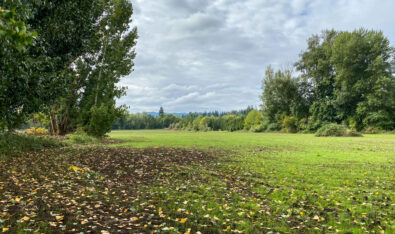
The site is a curious combination of wetland, trees, and open meadow.  The springs on this site - a rare find in dry Klickitat country - are surrounded by groves of mature cedar trees.  The springs seep down a gentle slope and across a hummocky wetland that provides a haven for wildlife.  Mats of grass and peat float on water trapped above a layer of impermeable clay soil, and aspen groves prosper where the soil is too wet for conifers.  The wetland is especially important to wildlife in the late season when upland water sources are hard to come by.   The wetland has been well-loved by generations of people in the Glenwood Valley.   Once homesteaded, a grove of old apple trees and other domestic remnants still linger where the old dwelling was perched on a rise at the foot of the meadow.  


Today, this wetland and wooded site is especially important for sandhill cranes. One of only 15 crane species in the world, sandhill cranes are endangered in Washington State.   While thousands of sandhill cranes migrate through the state, foraging along the Columbia River and in open fields and farmland, they stay and nest in only one place in the state: the Glenwood Valley.  They need wet meadows and grasslands with emergent vegetation to forage and nest, so they find areas where wetlands are open enough to provide clear views, but are still surrounded by conifer forests.  Sandhill cranes are very wary, preferring isolated sites with good cover during their nesting periods.  If they are disturbed by people, activities or predators, they desert their nests.  The uniqueness of the habitat niche - large tracts of undisturbed marsh and meadow - limits the opportunity for the state’s only crane to breed and raise their lanky young “colts.”  


So when Hancock Natural Resource Group (a private timber company), the landowner of the property, agreed to sell the 82-acre site to Columbia Land Trust for wildlife habitat, we felt it was an ideal fit.  The property is surrounded by hundreds of acres of forested hillside that have been owned and managed for forest resources over the past decades by Hancock and by the Washington Department of Natural Resources.  After efforts to establish ponderosa pine in the wet meadow failed, Hancock decided to turn the property over for wildlife habitat and conservation management, entering negotiations with Columbia Land Trust.


The Land Trust secured ownership of this rare conservation property using North American Wetland Conservation Act grant funds, a win for rare species and rare habitat, and an important part of the wildlife corridor between the Klickitat River and the Conboy National Wildlife Refuge in the Glenwood Valley.  The Land Trust is now considering restoration possibilities to enhance wetland characteristics and make it more attractive for amphibians, wetland flora, and sandhill cranes.


Document Actions
powered by Plone | site by Groundwire and served with clean energy