Personal tools
You are here: Home Our Work Conservation Projects
Document Actions

Conservation Projects

This is simply a folder with the Location content type added. The folder must also be set to Map View

Green Marker Long Beach Peninsula
This area contains an old-growth Douglas fir community that is found in only a handful of locations in the Pacific Northwest. Old-growth forest communities on the Long Beach peninsula and the Lower Columbia River area are rare and provide significant benefits to the ecosystem.

This area contains an old-growth Douglas fir community that is found in only a handful of locations in the Pacific Northwest. Old-growth forest communities on the Long Beach peninsula and the Lower Columbia River area are rare and provide significant benefits to the ecosystem.

46.3817543742 -124.039077759
Green Marker Hines Marsh
The largest interdunal wetland on the Pacific Coast, Hines Marsh is 3.5 miles long and approximately 900 acres.

The largest interdunal wetland on the Pacific Coast, Hines Marsh is 3.5 miles long and approximately 900 acres.

46.5763268061 -124.041824341
Green Marker Willapa Bay
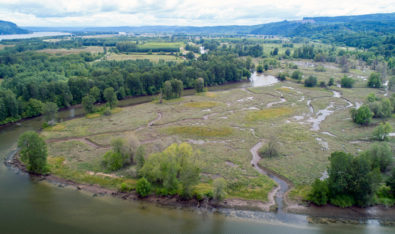
This site is home to a Sitka spruce forest and an open tidal salt marsh, providing vital habitat for Columbia salmon, bald eagles, Roosevelt elk, black bear, and a variety of shorebirds and waterfowl.

This site is home to a Sitka spruce forest and an open tidal salt marsh, providing vital habitat for Columbia salmon, bald eagles, Roosevelt elk, black bear, and a variety of shorebirds and waterfowl.

46.5364949 -123.9655712
Green Marker South Loomis Lake Wetlands
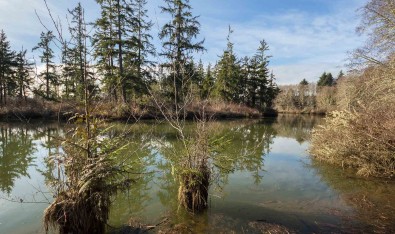
The flowers of Labrador tea and Douglas spirea dominate this wetland property. Bogs scattered throughout the property host native cranberries and the carnivorous round-leaved sundew plant, and black bears and elk are frequently spotted. Loomis Lake is important to migratory waterfowl such as trumpeter swans.

The flowers of Labrador tea and Douglas spirea dominate this wetland property. Bogs scattered throughout the property host native cranberries and the carnivorous round-leaved sundew plant, and black bears and elk are frequently spotted. Loomis Lake is important to migratory waterfowl such as trumpeter swans.

46.4274455993 -124.042854309
Green Marker Elochoman River
River in SW Washington that empties into the lower Columbia river.

The Elochoman River, outside of Cathlamet, Washington, is critical to endangered Columbian white-tailed deer and threatened salmon species. Columbia Land Trust completed conservation of 182 acres in this Columbia River floodplain that builds on the 5,600-acre Julia Butler Hansen Refuge for Columbian white-tailed deer.

46.2305155 -123.394204
Green Marker Walluski

This four-acre easement obtained by Columbia Land Trust helped maintain a positive neighbor relationship and secured additional land adjacent to other Walluski River properties.

46.1370249288 -123.779182434
Blue Marker Wolf Bay

Located in the Columbia River estuary outside of Astoria, Oregon, this 76-acre property features pristine wetlands that are an important salmon habitat and home to bald eagles.

46.1707964683 -123.691978455
Green Marker Grays River

More than 800 acres of land in the lower Grays River and Deep River watershed host salmon and other fish and wildlife species. These sites have been identified as some of the most important conservation efforts in the Columbia River estuary.

46.3113672096 -123.670692444
Blue Marker Willow Grove

Willow Grove This 312-acre property is the largest intact intertidal wetland on this stretch of the Columbia River, located near Longview, Washington.

46.169845441 -123.04069519
Blue Marker Cape Horn Trail

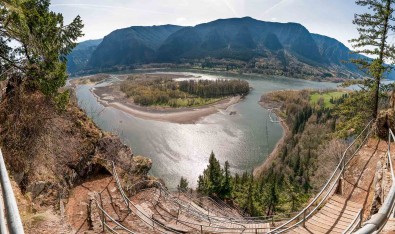
This stretch of forest provides a 12-acre link for the proposed Cape Horn Trail, part of the vision for a 45-mile Columbia Gorge trail from Washougal to Stevenson.

45.5892964815 -122.180328369
Green Marker Margerum Ranch

Margerum Ranch features large Oregon white oak woodlands, open meadows, oak savannah and talus slope that are home to Lewis' woodpeckers and pileated woodpeckers.

45.8100166155 -121.165809631
Green Marker Wind River, WA

This site encompasses 140 acres of forestland and Wind River frontage, on both sides of the river, protecting wildlife habitat, watershed functions, threatened salmon habitat and open space.

45.7629724263 -121.862411499
Green Marker Rowena Restoration

Working with private landowners in Rowena, Oregon, Columbia Land Trust volunteers have constructed over 50 bird boxes at this site that will house bluebirds, nuthatches, Lewis’ woodpeckers and bats. Volunteers also installed a late-season watering source to provide water to deer and other wildlife through the driest summer months.

45.6558079858 -121.318588257
Green Marker Klickitat River

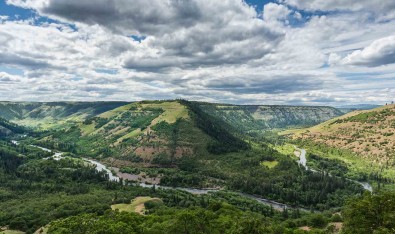
This site extends 15 miles along the middle reaches of the Klickitat River and protects more than 200 acres of oak woodland and mixed conifer forest.

45.8603685088 -121.086502075
Yellow Marker Stafford Basin

Where is Stafford Basin?

Stafford Basin is a triangular shaped area located south of Lake Oswego, west of West Linn and east of Tualatin.  The main watersheds are Wilson Creek, Pecan and Athey Creeks.  The three main tributaries all indicate good quality habitat and water quality.  All are tributaries of the Tualatin River. 

You can visit the Stafford Basin and walk the trail around Lusher Farm and up to Cooks Butte, however there is no designated parking area. It is best to park on Overlook Drive and walk to the trail head kiosk on Stafford Road.

Stafford BasinWhy conserve this land?

Conserving land in the Stafford Basin is important to preserve the air and water quality of the lower Tualatin Basin and helps keep nature close to where people live.  Constantly under pressure to urbanize, conserving land in the Stafford Basin creates livable communities for the future.

Our Accomplishments

Columbia Land Trust helped acquire 5 parcels in this area by working with private landowners and the City of Lake Oswego to purchase and encourage land donations.  To date, 200 acres have been conserved including Luscher Farm, Fir Lane Farm, Rosemont Riding Arena and Sunny Slope. 

Given the growing number of conserved acres, Columbia Land Trust envisioned a connected trail system.  Along with many partners, we developed a Stafford Basin Path and Trail Plan.  This plan identifies at least 15 miles of new trail connecting conserved natural areas and parks in Lake Oswego, Tualatin and West Linn.

Our Partners

City of Lake Oswego

City of West Linn

Oregon Tilth

Community Supported Agriculture
45.3704787354 -122.678146362
Yellow Marker Clackamas River Bluffs

What are the Clackamas River Bluffs?

The Clackamas River Bluffs are located on the north side of the Clackamas River between Carver and Barton Park, just south of the newly incorporated town of Damascus.

Three main streams feed the Clackamas River in this area: Richardson, Deep, and Noyer.

Interesting geologic formations occur in this area with a cliff and cave system that provides unique bat habitat.  On one property, old growth trees complement the unique natural features in this area providing good habitat for birds and wildlife.

Why conserve this land?Carver Caves

The Clackamas River supplies drinking water for numerous Clackamas County residents.  Wild salmon still spawn in the Clackamas watershed.  Fly fisherman and recreational boaters also enjoy the Wild and Scenic nature of the river.  The Clackamas River is truly a gem of the Portland region.

The Clackamas River Bluffs are an important natural feature of this river system.  The bluffs are threatened because a population increase to 67,000 people is planned for the Damascus area.  The interesting natural features and existing parks and green spaces are an opportunity to create a connected corridor of wildlife habitat that will help preserve air and water quality in the Clackamas River and help keep nature close to home for people in the Damascus area.

Our Accomplishments

Columbia Land Trust conserved 29 acres in the Clackamas River Bluffs area in September 2005.  This property was conserved in partnership with the landowners, Jeff and Lita Pratt, as well as financial assistance from Clackamas County's Title III grant program.
45.3929050544 -122.420654297
Yellow Marker Balch Creek

Where is Balch Creek?

Just minutes from the busy industrial lands in NW Portland lies a beautiful, old forest of trees and clean, cool water.  Balch Creek is a watershed which is shaped like a finger pointing down into the heart of Northwest Portland.  

The lower portion of the watershed is preserved by the Audubon Society of Portland and the City of Portland.  The upper portions of the watershed are still in large plots of private land that contribute to the native cutthroat trout and are home to considerable wildlife habitat.  Balch Creek is located in Macleay Park in Portland, which is at the very end of NW Upshur.  You can hike several miles in this beautiful forest along Balch Creek on the Wildwood trail from Lower Macleay Park. 

Balch Creek

Why conserve this land?

The privately held land in the upper watershed is key to the health of Balch Creek Watershed.  In order to keep the cutthroat trout at Lower Macleay Park or at the Audubon Society's Nature Center healthy, we must work with the private landowners in the upper watershed to conserve their land.

Forest Park, at 5,000 acres, is long and narrow.  By preserving Balch Creek, Forest Park's wildlife habitat is greatly enhanced.

Our Accomplishments

Three Rivers has:

  • Conducted informational workshops to private landowners about conservation options.
  • Mailed information to each landowner holding key lands in the watershed.
  • Met with 8 landowners to inform them of their options.
  • Conserved 30 acres of land with two conservation agreements.

Partners

Friends of Forest Park

Portland Parks and Recreation

Audubon Society of Portland
45.52837 -122.719727
Yellow Marker Lower Gales Creek

Where is Gales Creek?

Gales Creek is located near Forest Grove.  It begins in the Coast Range and travels to the Tualatin River.  It has good water quality and is home to some of the highest fish counts in all of the Tualatin tributaries.   Its headwaters are timberland and, as the topography flattens, agriculture is the most prevalent activity along its banks.

Lower Gales CreekWhy conserve this land?

Gales Creek is important to conserve because of its significant water quality contribution to the Tualatin River and the existence of fish populations.

Our Accomplishments

In 2006, Columbia Land Trust (formerly Three Rivers)  mapped invasive weeds along a 4-mile stretch of Gales Creek.  These invasive weeds threaten the water quality in Gales Creek by inhibiting the growth of native trees in the riparian corridor.  These trees provide shading that cools the water for fish.  Japanese knotweed is one of the newest invaders in the watershed.


Partners

Tualatin River Watershed Council

Clean Water Services


45.6077931575 -123.261795044
Yellow Marker Headwaters of Tualatin River National Wildlife Refuge

Where is the Headwaters of the Refuge?

The headwaters of the Tualatin River National Wildlife Refuge can be found near Sherwood.  There are three main watersheds that contribute water to the Refuge: Chicken Creek, Cedar Creek and Rock Creek.  All of these creeks trend northward through Sherwood and into the Refuge, which lies on the banks of the Tualatin River.  You may visit the Refuge at 19255 SW Pacific Highway (Highway 99W), Sherwood, OR 97140, please click here for further directions.

Tualatin HeadwatersWhy conserve this land?

The lands in these watersheds are important to conserve because of their water quality contribution to the Refuge.  The U.S. Fish and Wildlife Service is restoring native habitats for songbirds, waterfowl and fish on the Refuge.  These habitats depend on good water quality from the surrounding creeks.

Keeping these creeks healthy is also important because they flow through the Sherwood community and help provide clean air, clean water and nature close to home for the people of Sherwood and surrounding areas.

Our Accomplishments

Three Rivers (now Columbia Land Trust) worked with our partner Raindrops to Refuge to:

  • Develop a conservation plan for the area.  This plan helps identify key areas to conserve. 
  • Hold conservation workshops for private landowners to learn more about conservation options.

Partners

Raindrops to Refuge

Clean Water Services

Tualatin River National Wildlife Refuge


45.3819444 -122.8319444
Yellow Marker Johnson Creek

Where is Johnson Creek?

Johnson Creek is the last free flowing creek in Southeast Portland.  The main portion of the creek runs east/west from Boring to the Willamette River.  The upper reaches run through rural farms and nurseries, while the lower reaches flow through high density urban areas.  Endangered salmon have been found in the creek.

Johnson CreekWhy conserve this land?

Threats to this watershed are severe with significant development, poor water quality from road runoff, extreme flooding and barriers to fish passage.

Despite all of these threats, it is important to conserve this creek as a symbol for how humans and wildlife may be able to coexist, even in the most developed and utilized human environment.

Our Accomplishments

  • Assisted one landowner in donating their 3-acre property to the City of Portland for restoration.
  • Held three workshops for landowners to inform them about conservation options.

Our Partners

Johnson Creek Watershed Council

Bureau of Environmental Services City of Portland
45.4588362777 -122.584848404
Yellow Marker Upper Rock Creek

Where is Upper Rock Creek?

The headwaters of Rock Creek flow from the Skyline Ridge area through unincorporated Multnomah and Washington Counties.  The creek contains fish and some intact riparian areas.  It is also home to elk herds that travel into the north end of Forest Park.  This area is a mix of forest lands, small farms, and large lot homes.

Why conserve this land?

This land is important to preserve for water quality in the Tualatin River, as well as elk habitat in Forest Park.  Forest Park is long and narrow and in order to sustain the health of the park, it must remain connected to larger habitat areas adjacent to it and continue these connections all the way to the Coast Range.

Our Accomplishments

Three Rivers (now Columbia Land Trust)  held several workshops to help landowners understand their conservation options.


Our Partners

Clean Water Services

45.6041903871 -122.81375885
Yellow Marker Tryon Creek

Where is Tryon Creek?

Tryon Creek flows through Tryon Creek State Park, a 650 acre park located between Lake Oswego and Southwest Portland at 11321 SW Terwilliger Blvd., Portland, OR 97219.  The Friends of Tryon Creek State Park use the park to educate thousands of children every year about natural ecological processes. 

Tryon Creek joins the Willamette River in Lake Oswego and has many small tributaries that flow into the mainstem, impacting the water quality.  Tryon Creek contains both anadromous and resident fish.

Why conserve this land?

It is important to conserve the small streams that feed into Tryon Creek State Park because the water quality in these streams determines the health of the Park.  Landowners surrounding the park hold the keys to the habitat and water quality in Tryon Creek.

Our Accomplishments

Three Rivers (now Columbia Land Trust) holds one conservation easement, the Smith property, along Nettle Creek - a tributary of Tryon Creek.  This 4.5 acre easement limits development to just four homesites close to the road, while the creek corridor remains intact.  The easement also limits tree cutting.


Our Partners

Friends of Tryon Creek State Park

Tryon Creek Watershed Council

Bureau of Environmental Services City of Portland


45.443207 -122.675114
Yellow Marker Council Creek

Where is Council Creek?

Council Creek is a feeder stream that flows into Dairy Creek and eventually the Tualatin River.

The Creek flows north of Forest Grove and Cornelius, an area where the Urban Growth Boundary is likely to expand in the future.

Why conserve this land?

The western pond turtle, a sensitive species, is believed to use the areas along Council Creek to reproduce and bask in the sun. 

Unplanned development, heavy fertilizer use, and failure to conserve key lands will compromise the area’s turtle populations and water quality contributions. 

Our Accomplishments

Three Rivers Land Conservancy (now Columbia Land Trust) held a workshop for landowners in Council Creek in May 2006.  Speakers included experts from the Tualatin Soil and Water Conservation District and the Turtle Biodiversity Project.  The workshop provided landowners with information about Council Creek watershed, the ecology of pond turtles and offered some conservation strategies from conservation easements to payment program for reforesting the stream corridor.

45.5431768 -123.0662058
Yellow Marker McFee Creek

Where is McFee Creek?

McFee Creek flows from the steep Chehalem mountains northward into the Tualatin River near the village of Scholls.  It is outside any Urban Growth Boundaries. 

Why conserve this land?

Logging and agricultural practices dominate the watershed that can often limit water quality.

Protecting lands within this watershed will ensure good quality water to the Tualatin River for fish and wildlife. 

McFee CreekOur Accomplishments

Three Rivers Land Conservancy (now Columbia Land Trust) holds one conservation easement in this Focus Area.  McFee Creek flows through this 34 acre parcel.

45.4080556 -122.9222222
Yellow Marker Abernethy Watershed

Where is Abernethy Watershed?

Abernethy Creek flows through both rural and incorporated Clackamas County.  It enters the Willamette in Oregon City.  During the 1996 floods, Abernethy Creek overflowed its banks and submerged low lying lands in Oregon City including Clackamas County office buildings.

Abernethy Creek

Why conserve this land?

Abernethy Creek is home to steelhead and other fish.  Its steep ravines are still forested, providing shade and woody debris for healthy fish populations. 

Our Accomplishments

Three Rivers Land Conservancy (now Columbia Land Trust) holds two conservation easement properties in Abernethy Creek. 

The first is the Pizzo property and the second is the Rambo property.  Each property contains a portion of Abernethy Creek.

45.3573429 -122.6067583
powered by Plone | site by Groundwire and served with clean energy